Swachh Bharat Mission-Urban
Swachh Bharat Mission-Urban
Mission Updates


Mission Updates
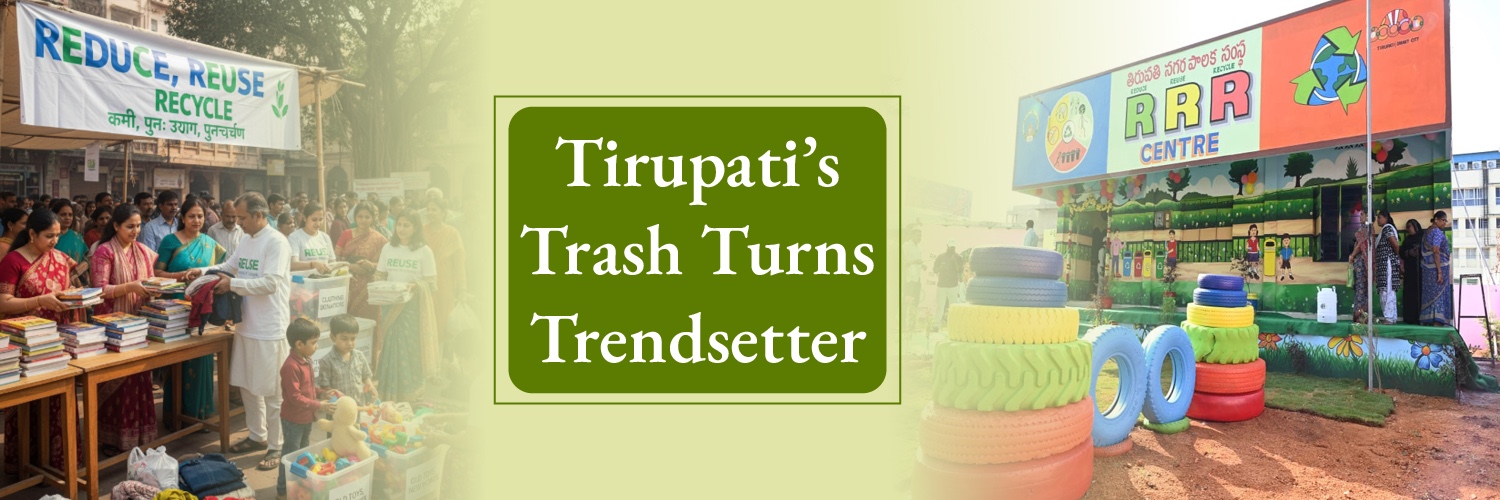
Under Swachh Bharat Mission-Urban 2.0, Tirupati Municipal Corporation has scripted an inspiring story of circular economy through its Comprehensive Upcycling Initiative, where waste doesn’t end its journey, it begins a new one. Guided by the belief of Swachh Aadat se Swachh Bharat, the initiative blends swachhata, compassion, and creativity to build a clean and green city.
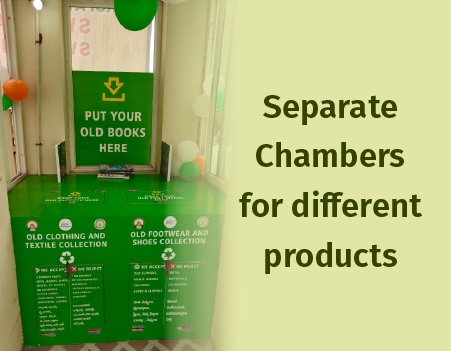
At the heart of this initiative is the concept of upcycling - transforming discarded materials into products of higher value instead of sending them to landfills. To make this vision practical and participatory, Tirupati introduced specially designed upcycling drop boxes, seamlessly linked with permanent RRR Centres.
hese drop boxes feature separate chambers for old books, clothes, and footwear, ensuring 100% source-level segregation. This smart design eliminates secondary sorting, preserves material quality, and makes responsible disposal easy for citizens. Strategically installed in RWAs, apartment complexes, and gated communities, the drop boxes tap into areas with high potential for reusable items, maximizing both quantity and quality of collection. A weekly, scheduled collection system with dedicated vehicles ensures smooth transportation of materials to the RRR Centres.
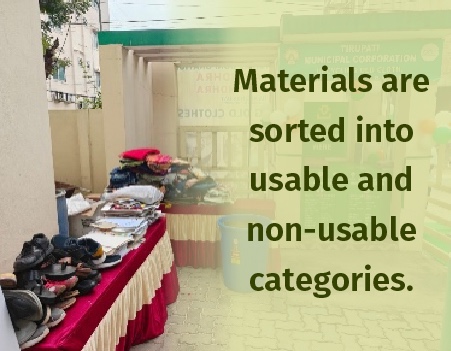
At the RRR Centres, materials are sorted into usable and non-usable categories. Items in good condition find meaningful second lives, clothes and footwear are distributed to old age homes, orphanages, the homeless, and economically weaker sections, while books help create libraries in government and municipal schools, nurturing reading habits and learning.
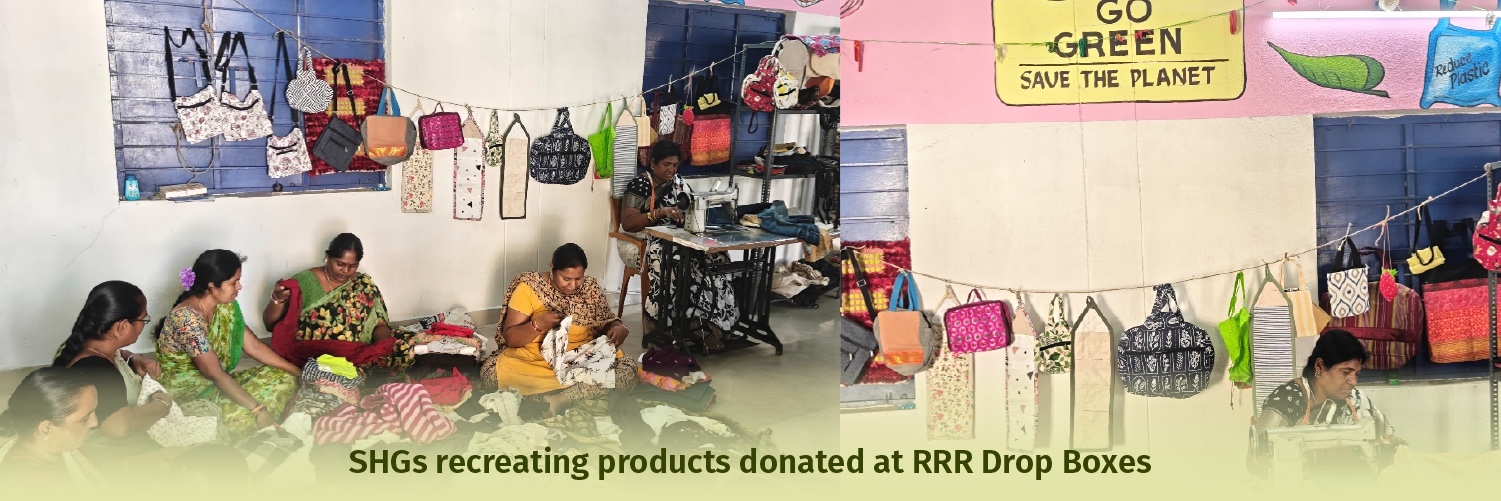
Damaged materials are not discarded either. Clothes are handed over to Self Help Group (SHG) members, who, after skill training supported by the Ministry of Textiles and the Textiles Committee, Mumbai, convert them into eco-friendly products like bags and doormats, creating sustainable livelihoods. Footwear is either locally repaired and redistributed or sent to a Bengaluru-based upcycling unit for recycling.
Used clothes are being upcycled through SHGs into value-added products, including 275 doormats, 1,025 foot mats, 2,500 cloth bags, and 0.5 tonnes of automobile cleaning cloths. These products have been successfully sold in the open market, supporting livelihoods and promoting sustainable waste management. As part of Tirupati’s circular economy journey, old books are being given a second life by strengthening libraries in municipal schools across the city, nurturing a culture of learning among young minds. At the same time, discarded footwear is channelled to authorised footwear factories for reuse, transforming waste into economic value while promoting sustainability and resource efficiency.
With enthusiastic public participation, the initiative has reduced landfill waste, strengthened social welfare, empowered SHGs, and fostered environmental responsibility among citizens. Through this thoughtful and inclusive approach, Tirupati is steadily moving towards becoming a garbage-free city, proving that when clean habits become a way of life, cities don’t just manage waste, they transform it.